A weekend away, an afternoon working outdoors, a few devices you want to keep running. The best starting point is not the biggest number on the box. It is the list of things you will actually plug in.
Write down the devices first.
Which need power at the same time? What do their labels or manuals say about input and startup requirements? A laptop, a light and an appliance can place very different demands on a power station. Check the relevant ports and the requirements of each device rather than assuming that an AC rating answers every compatibility question.
Separate capacity from output.
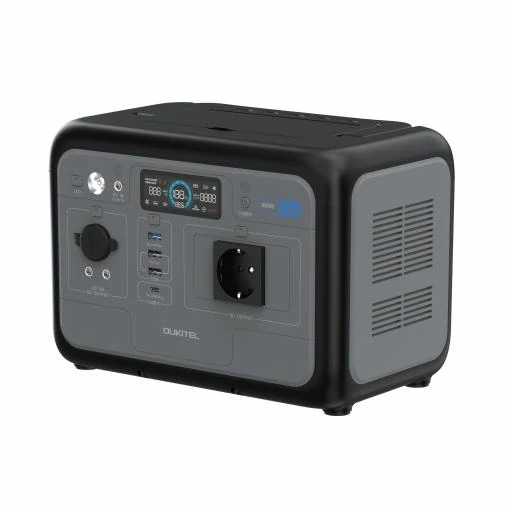
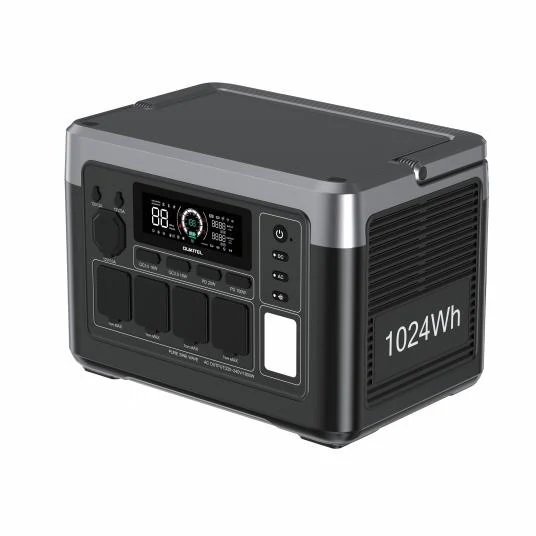
Watt-hours describe stored energy; watts describe power. In OUKITEL’s catalogue, the P800E is listed at 512 Wh and 800 W AC output. The P1000E PLUS is listed at 1,024 Wh and 1,800 W AC output. The larger capacity is twice the smaller catalogue figure, but that does not promise twice the runtime in every situation. Load, conversion losses and operating conditions still matter.
Think about the carrying part.
The P800E has a catalogue weight of 6.2 kg; the P1000E PLUS is listed at 11.7 kg. A unit that stays close to a vehicle raises different questions from one you carry between locations. More capacity and output are useful only in the context of what you need and what you are prepared to move.
Finish with the exact setup.
Confirm the regional model, sockets, charging accessories and support available to you. If solar charging is part of the plan, verify the panel and input compatibility for the particular unit; a solar charging option does not mean any panel will work.
Compare the P800E and P1000E PLUS on FAR & FORM. Bring your device list to our AI, and explore what to check before choosing.
Runtime and device compatibility have not been independently tested by FAR & FORM.
OUKITEL Foldable Catalog 2026 · PDF page 2
Product information is drawn from the maker-supplied catalogue. Confirm the exact model, market version, availability and terms before purchase or partnership.