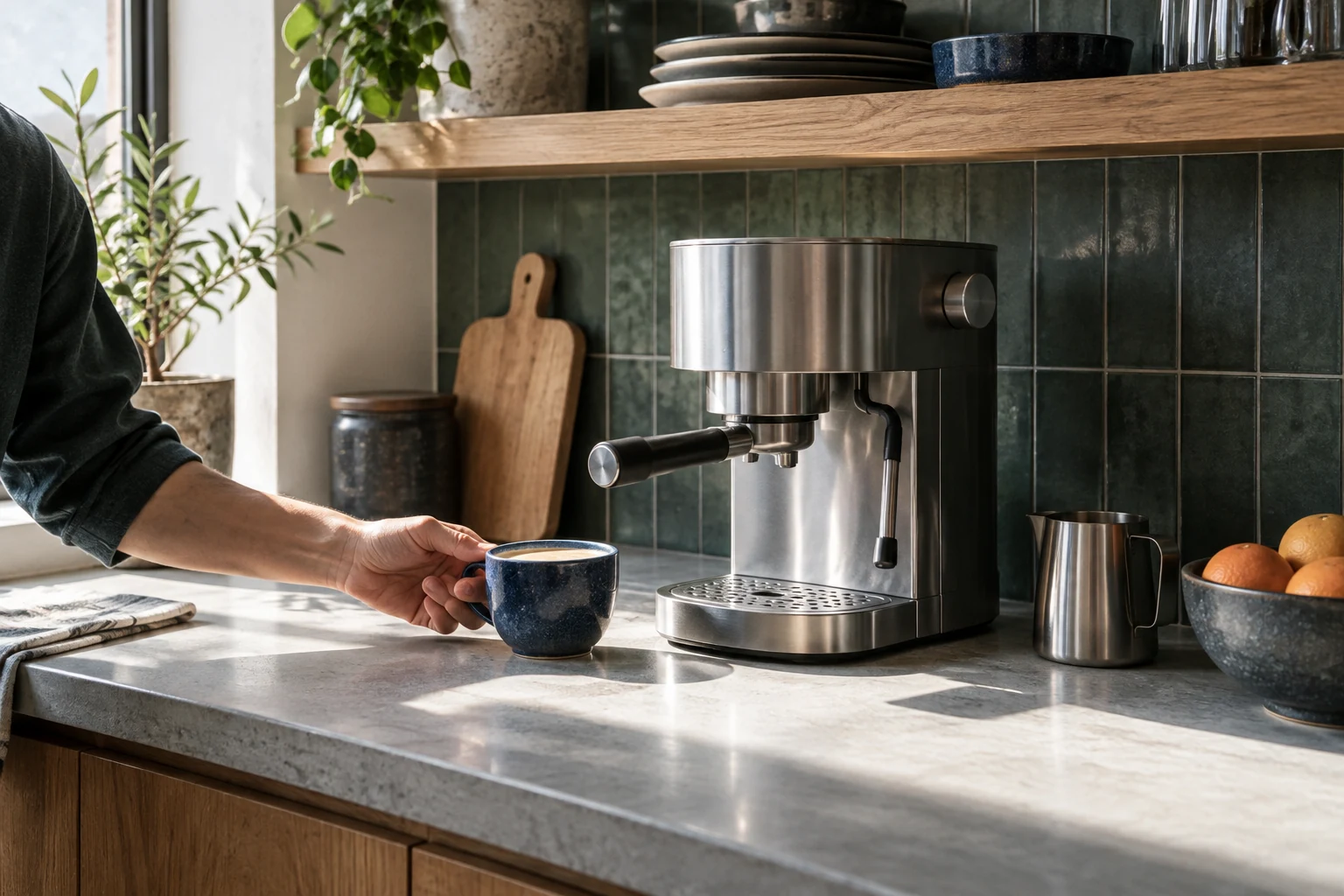
Some objects keep asking for your attention. Others quietly become part of your day. A chair you choose without thinking. A bag that goes everywhere. A cup you reach for first. What makes something earn that place?
Imagine the hundredth use.
The first encounter is easy to picture. Try the hundredth instead. Does it fit where you actually keep it? Is it comfortable when you are tired or in a hurry? The details that disappear in a product photograph often return in everyday use.
Care is part of the design.
Ask what happens when a part wears out, a surface needs cleaning or your needs change. Look for specific answers about materials, replacement parts and support. A reassuring description is a starting point, not a substitute for those details.
Better does not always mean new.
Sometimes the best discovery is a different way to use something you already own. Move it, repair it, or learn what it can do before replacing it. Keeping fewer things is not a style rule; it can simply mean making more room for the things you enjoy using.
Make your own shortlist.
Choose three things you use often and write down why you keep choosing them. Then notice what they have in common. Your next purchase can begin with that knowledge, rather than someone else’s idea of what a good life should look like.
An editorial perspective, illustrated with an AI-created scene. No specific maker, factory or tested product is depicted.